

Do bathroom grab bars need to be grounded? This is a question that often comes up when it comes to the installation and safety of bathroom grab bars. As a supplier of high - quality bathroom grab bars, I've encountered this query numerous times from customers, contractors, and even safety experts. In this blog, we'll delve into the science and practicality behind grounding bathroom grab bars.
Understanding the Basics of Grounding
Before we discuss whether bathroom grab bars need grounding, it's essential to understand what grounding is and why it's important. Grounding is a safety measure that provides a direct path for electrical current to flow into the earth in case of an electrical fault. In a home electrical system, grounding helps prevent electrical shocks by ensuring that any stray electrical current is safely diverted away from people and equipment.
Electrical appliances and systems in our homes are typically grounded to protect us from short - circuits, power surges, and other electrical malfunctions. For example, when you plug in a toaster, the third prong on the plug is the grounding prong. If there's an electrical problem inside the toaster, the current can flow through the grounding wire to the earth, rather than through your body if you touch the toaster.
The Electrical Risk in Bathrooms
Bathrooms are high - risk areas when it comes to electrical safety. Water is an excellent conductor of electricity, and the presence of moisture in bathrooms increases the likelihood of electrical shocks. Electrical appliances such as hair dryers, heaters, and lighting fixtures are commonly used in bathrooms, and any electrical fault in these devices can pose a serious threat.
However, bathroom grab bars themselves are usually not electrical devices. They are simple mechanical fixtures designed to provide support and stability for people when they are using the toilet, getting in and out of the bathtub, or moving around in the bathroom. Since they don't have an electrical component, there's no inherent electrical current flowing through them under normal circumstances.
Factors to Consider for Grounding Bathroom Grab Bars
1. Proximity to Electrical Sources
If a bathroom grab bar is installed in close proximity to electrical sources, such as an electrical outlet, light fixture, or a heated towel rack, there is a theoretical risk of the grab bar coming into contact with stray electrical current. For example, if there's a short - circuit in an electrical outlet and the electrical wiring is damaged, the current could potentially spread to nearby metal objects, including the grab bar.
In such cases, grounding the grab bar might seem like a good idea. By grounding the grab bar, any stray electrical current that reaches it can be safely diverted to the earth, reducing the risk of electrical shock to anyone who touches the bar. However, it's important to note that this is a very rare scenario. Most modern electrical systems are designed with multiple layers of protection, such as circuit breakers and ground - fault circuit interrupters (GFCIs), which are designed to cut off the electrical supply in case of a fault.
2. Material of the Grab Bar
The material of the grab bar also plays a role in determining whether grounding is necessary. Most bathroom grab bars are made of metal, such as stainless steel or aluminum. Metals are good conductors of electricity, which means they can carry electrical current if they come into contact with it.
On the other hand, there are also grab bars made of non - conductive materials, such as plastic or fiberglass. These non - conductive grab bars do not pose an electrical risk and do not need to be grounded. If you're concerned about electrical safety and want to avoid the need for grounding, choosing a non - conductive grab bar might be a viable option.
Industry Standards and Regulations
Building codes and safety standards vary from region to region, and they often provide guidelines on electrical safety in bathrooms. In general, most building codes do not specifically require bathroom grab bars to be grounded. However, it's always a good idea to consult local building authorities and follow their regulations when installing bathroom grab bars.
Some safety standards, such as those set by the Americans with Disabilities Act (ADA), focus more on the structural integrity and accessibility of grab bars rather than their electrical safety. The ADA requires grab bars to be able to support a certain amount of weight and to be installed at specific heights and angles to ensure they are accessible for people with disabilities.
Practical Considerations for Grounding
Even if grounding a bathroom grab bar is not required by code, there are some practical considerations to keep in mind. Grounding a grab bar can add an extra layer of safety, especially in older bathrooms where the electrical system might not be as reliable. However, grounding also adds complexity to the installation process.
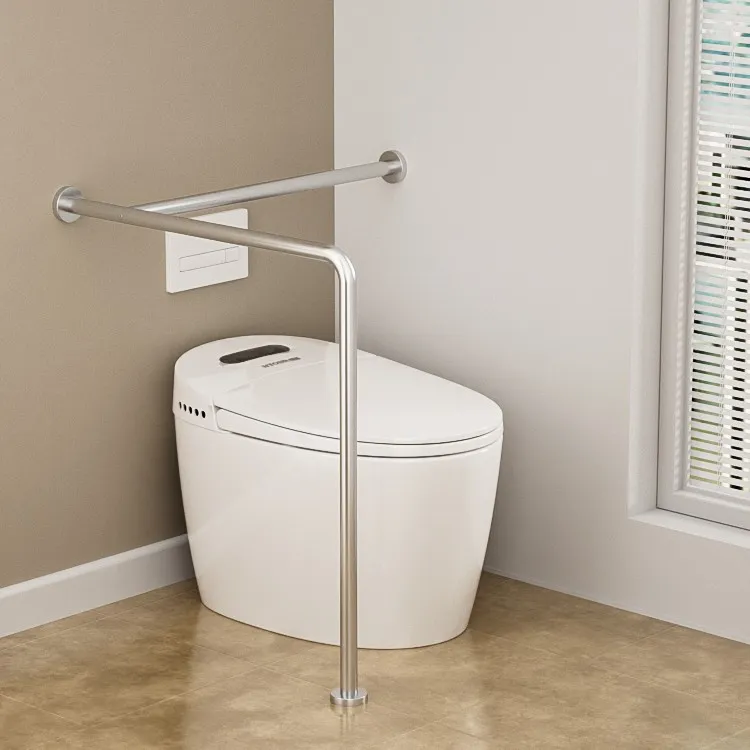

Installing a grounding wire for a grab bar requires knowledge of electrical systems and proper grounding techniques. It's not a task that should be attempted by someone without electrical expertise. If the grounding is not done correctly, it can actually create more problems than it solves, such as creating a false sense of security or causing electrical interference.
Our Product Range and Safety
As a bathroom grab bar supplier, we offer a wide range of grab bars to meet different needs and preferences. Our Toilet - Aids Safety Support Handrail is a popular choice for providing support near the toilet. It is made of high - quality materials and is designed to be sturdy and reliable.
We also have Barrier - Free Toilet Handicap Grab Bars that are specifically designed for people with disabilities. These grab bars meet the ADA standards for accessibility and are available in different sizes and styles.
Another product in our range is the Wall Hung Bathroom Rails for Toilet. These rails are easy to install and provide excellent support for people when they are using the toilet.
All our grab bars are thoroughly tested for quality and safety. We ensure that they are structurally sound and can withstand the weight and stress of regular use. While grounding is not a standard feature for our grab bars, we can provide guidance and support if you have specific requirements regarding grounding or electrical safety.
Conclusion and Call to Action
In conclusion, while there is no hard - and - fast rule that bathroom grab bars need to be grounded, it's important to assess the specific situation in your bathroom. Consider the proximity to electrical sources, the material of the grab bar, and local building codes. If you're unsure, it's always a good idea to consult a professional electrician or a building inspector.
As a trusted bathroom grab bar supplier, we are committed to providing high - quality products and excellent customer service. If you're interested in purchasing our bathroom grab bars or have any questions about grounding or other safety features, we encourage you to reach out to us. Our team of experts is ready to assist you with your procurement needs and help you make the best choice for your bathroom.
References
- National Electrical Code (NEC)
- Americans with Disabilities Act (ADA) Standards for Accessible Design
- Electrical Safety Foundation International (ESFI) publications on bathroom electrical safety